
The Future of photography is here : How Sony's Triple-Layer Sensor Will Change the Game
Sony, a name synonymous with innovation in the imaging world, is once again pushing the boundaries of what's possible with its latest development. During a recent investor presentation, Sony Semiconductor Solutions (SSS) unveiled an ambitious plan for a triple-layer image sensor. This new architecture promises a massive leap forward in camera performance, hinting at a future where our cameras are smarter, faster, and produce even more stunning images.
The Future of photography is here : How Sony's Triple-Layer Sensor Will Change the Game
Sony, a name synonymous with innovation in the imaging world, is once again pushing the boundaries of what's possible with its latest development. During a recent investor presentation, Sony Semiconductor Solutions (SSS) unveiled an ambitious plan for a triple-layer image sensor. This new architecture promises a massive leap forward in camera performance, hinting at a future where our cameras are smarter, faster, and produce even more stunning images.
Author title
Nayera Hamed
May 8, 2024
Intro
Beyond Two Layers: The Power of Three
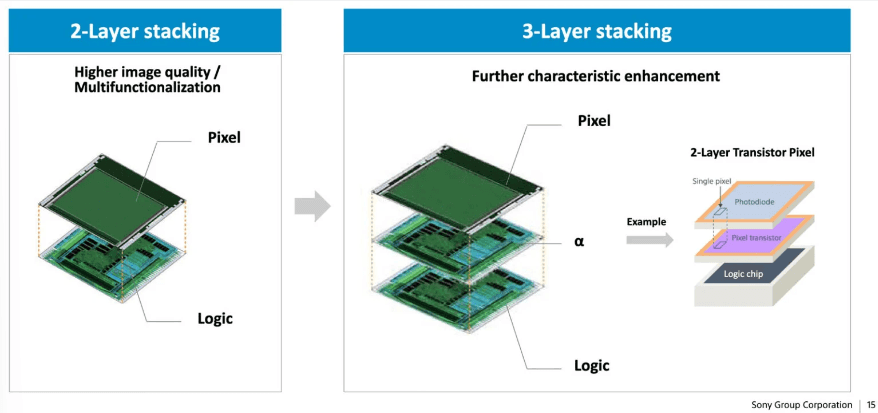
You might be surprised to learn that many of today's high-end cameras, including Sony's own flagship a1 II, already use a two-layer sensor design. This design features a photodiode layer, where the magic of capturing light happens, and a separate transistor layer that handles all the processing. But what if you could add a third layer? That's exactly what Sony is proposing. By adding an extra layer dedicated to processing, the company aims to unlock a new level of performance that was previously unthinkable.
A New Era of Speed and Clarity
What does this expanded processing power actually mean for photographers and videographers? The list of potential benefits is incredible. A triple-layer sensor could lead to significant improvements in dynamic range, allowing for greater detail in both the brightest highlights and the darkest shadows. We can also expect to see enhanced sensitivity, lower noise, and, perhaps most excitingly, a boost in readout speed.
Faster readout speeds are a game-changer. They will dramatically reduce the dreaded "rolling shutter" effect in video and electronic shutter photography, allowing for faster continuous shooting, and even improving autofocus performance. For videographers, this extra speed could also open the door to new high-resolution video modes that were previously limited by processing bottlenecks.
Solving the Dynamic Range Puzzle
The concept of a third layer isn't entirely new. Sony first hinted at this technology back in 2021, and the recent presentation echoes many of the same exciting promises. One of the biggest challenges in sensor design is balancing pixel size and saturation signal level, which directly impacts dynamic range. Simply adding more layers can sometimes shrink the pixels, reducing their full-well capacity.
However, Sony's 2021 announcement provided a solution. The third layer isn't just a pure processing layer; it can also be used for pixel transistors. This innovative stacking technology separates the photodiodes and pixel transistors onto different substrates. This allows both layers to be individually optimized, potentially doubling the saturation signal level and significantly widening the dynamic range without compromising pixel size.
The Future Is Bright for Sony Alpha
While a specific release date for this triple-layer sensor remains unknown, Sony's track record speaks for itself. The company has a history of bringing groundbreaking technology to market, from the global shutter sensor in the a9 III to the incredibly fast stacked sensor in the a1 series. This new sensor architecture is a clear sign that Sony remains deeply committed to advancing full-frame imaging. The future of photography looks incredibly bright, and we can't wait to see what amazing new possibilities this technology will unlock